Powering Electrification and Global Growth

Copper

Overview

Powering Electrification and Global Growth

Copper, with the periodic table symbol Cu, is a reddish-brown metal known for its excellent electrical and thermal conductivity, durability, ductility and corrosion resistance. It is one of the world’s most widely used industrial metals and plays a vital role in electricity networks, building construction, transport, electronics, renewable energy and modern infrastructure. Copper’s ability to conduct electricity efficiently makes it essential to the technologies supporting global electrification. At Andrada, copper forms part of the mineralisation upside at the Brandberg West exploration licence, where the asset provides diversification potential through tungsten and copper in addition to tin. (Brandberg West)

USES

Copper is used across a broad range of sectors, including building construction, electrical and electronic products, transportation equipment, consumer products and industrial machinery. According to USGS data, copper and copper alloy products are used in building construction, electrical and electronic products, transportation equipment, consumer and general products, and industrial machinery and equipment. (U.S. Geological Survey Publications)

Its conductivity makes copper essential for power cables, wiring, motors, transformers, charging infrastructure, renewable energy systems and electricity grids. As the world invests in cleaner energy and expanded grid infrastructure, copper remains central to the energy transition.

Copper SUPPLY

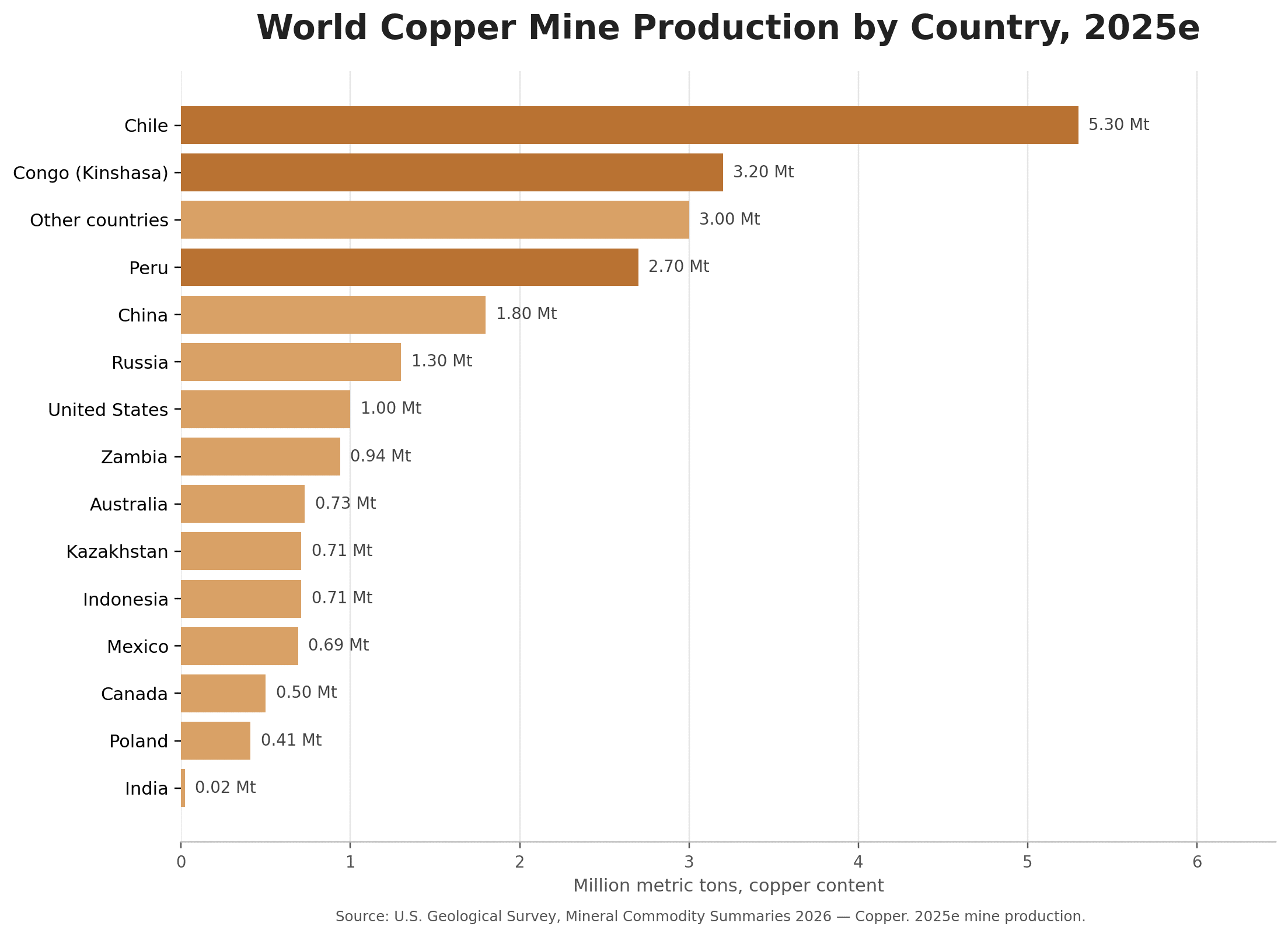
Global copper mine production was estimated at approximately 23 million tonnes in 2025, with refinery production estimated at approximately 29 million tonnes. Chile, the Democratic Republic of Congo, Peru, China and other established mining regions remain key contributors to global supply. (U.S. Geological Survey Publications)

Copper supply is increasingly shaped by declining ore grades, project lead times, capital intensity and the need for new discoveries. Recycling also plays an important role in the copper market, with copper recovered from scrap contributing materially to supply. (U.S. Geological Survey Publications)

DEMAND

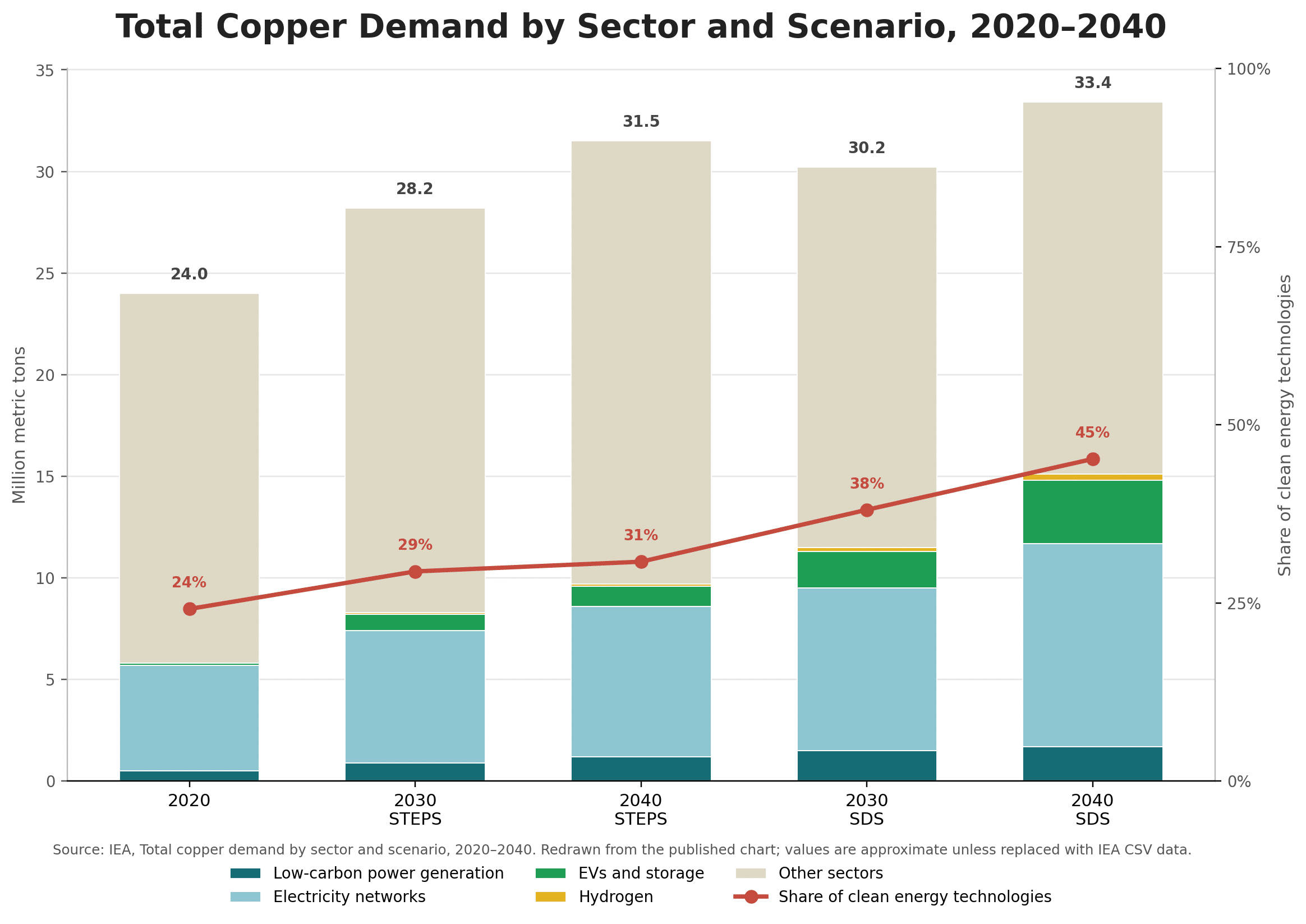
Copper demand is closely linked to economic growth, urbanisation, electrification and infrastructure development. The expansion of electricity grids, renewable energy, electric vehicles, data infrastructure and advanced manufacturing is expected to increase copper intensity across the global economy.

The International Energy Agency noted that the rapid expansion of grid investments in China was the single largest contributor to copper demand growth over the past two years, highlighting the metal’s importance to modern energy systems. (IEA)

outlook

Copper is expected to remain one of the most important metals for the global energy transition. The International Energy Agency has warned that, despite strong copper demand from electrification, the current mine project pipeline points to a potential 30% supply shortfall by 2035 because of declining ore grades, rising capital costs, limited resource discoveries and long project lead times. (IEA)

For Andrada, copper exposure through Brandberg West supports the Company’s strategy of building a diversified critical metals portfolio in Namibia. With Andrada’s portfolio consisting of two mining licences and one exploration licence, the addition of copper strengthens the broader narrative around long-term growth, diversification and exposure to metals that support electrification and new technology demand. (Andrada Mining)